<Mystery Pond Water Organisms>
Group 4 (Dayeon Jung, Wenyi Fu , Mariam Elias, Conner Laursen)
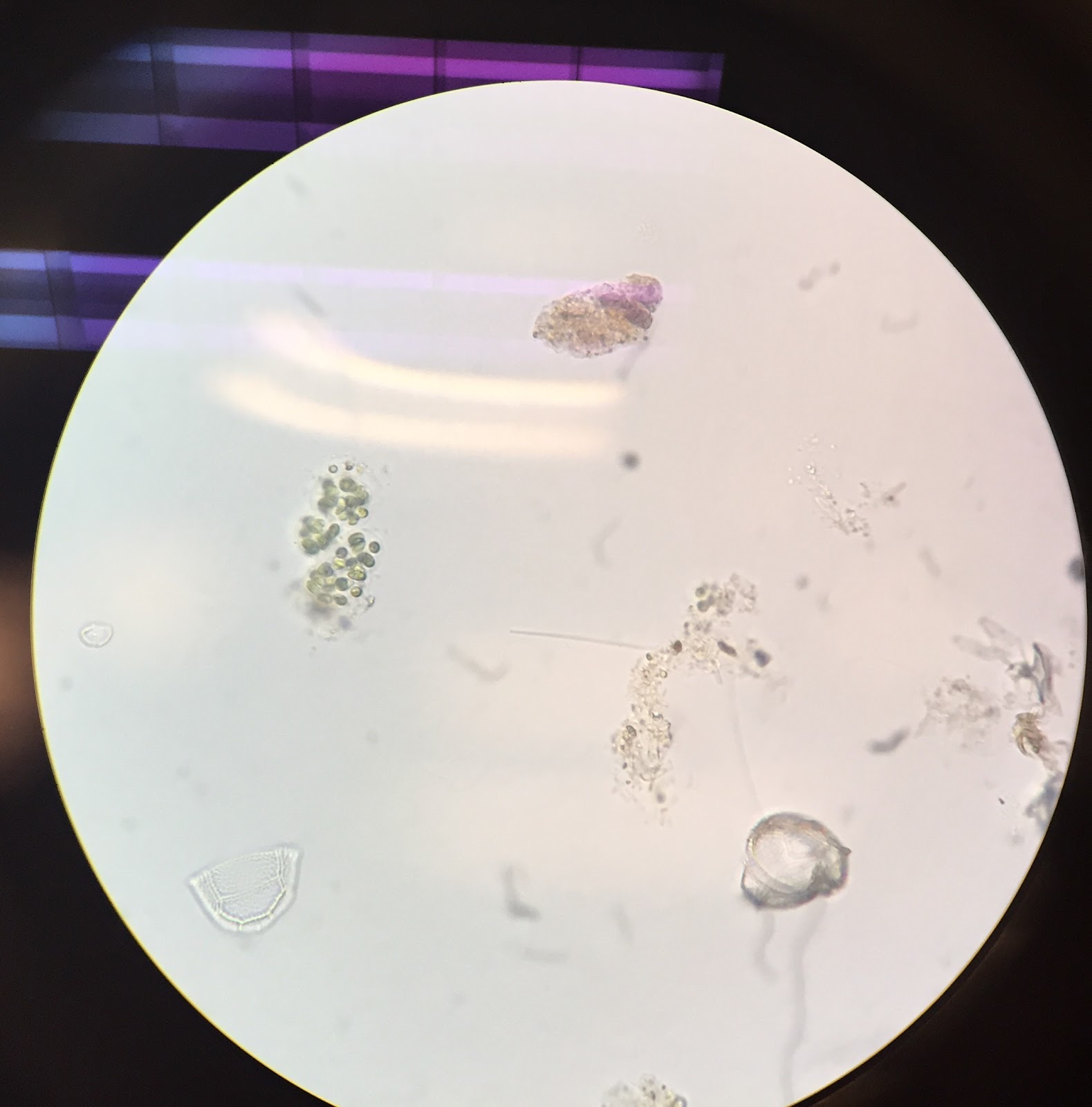
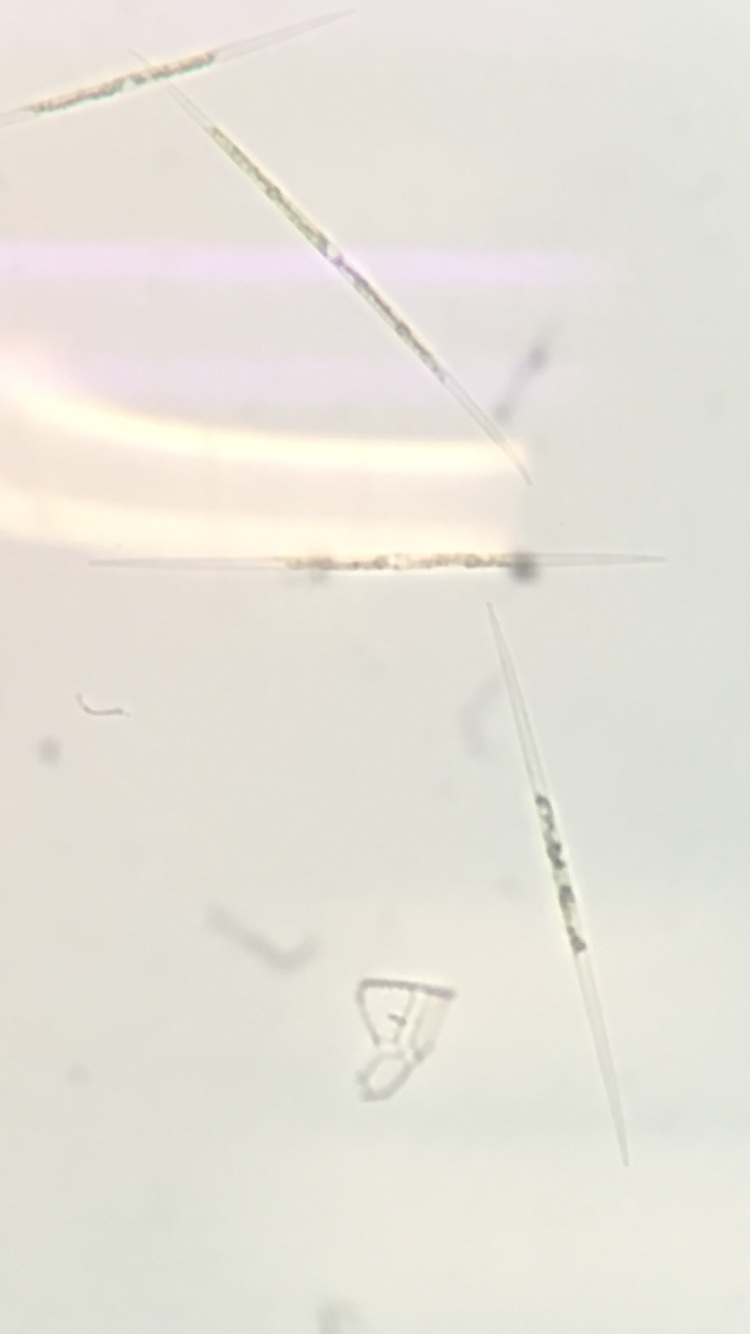
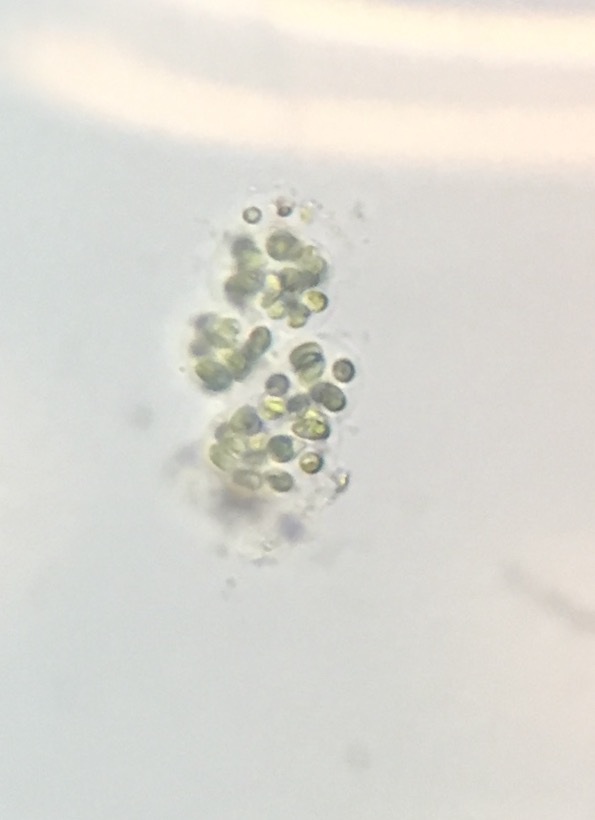
Our group saw creatures swimming around in the pond water sample. Here are the organisms identification that we found. We took two samples from Diane and Chloe. We used 40x magnification for each of them.
Whole view
Picture 1 Picture 2
Partial view
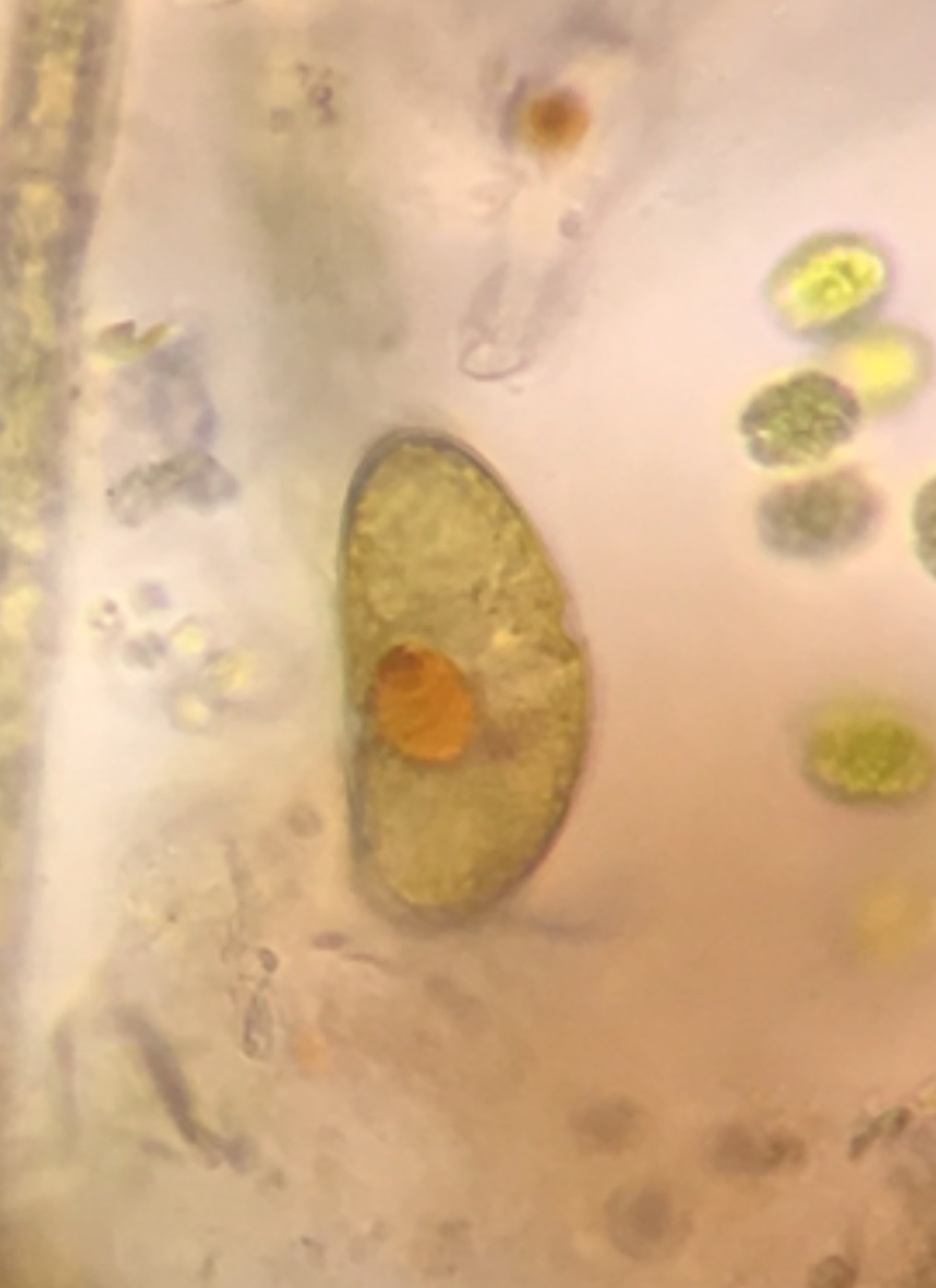
Organism 1: Colpoda
Domain: Eukaryota
Kingdom: Chromista
Subkingdom: Harosa
Order: Colpodida
Family: Colpodidae
Superphylum: Alveolata
Phylum: Ciliophora
Class: Colpodea
Genus: Colpoda
Defining Characteristics
Macronucleus with brown color (kidney shaped)
Outside is green color
It looks like its slightly concave on one side, and concave on the other side.
Observations and comments:
Usually Colpoda are found in moist soil and they are able to quickly enter the protective cysts and will also be found in desiccated samples of vegetation and soil as well as in some temporary natural pools as tree holes.
References
"Colpoda." Wikipedia. Wikimedia Foundation. Web. 14 Apr. 2016.
"WoRMS - World Register of Marine Species." WoRMS - World Register of Marine Species. Web. 14 Apr. 2016.
Organism 2: Stephanodiscus
Domain: Eukaryota
Kingdom: Chromista
Order: Thalassiosirales
Family: Stephanodiscaceae
Subphylum: Bacillariophytina
Phylum: Heterokontophyta
Class: Bacillariophyceae
Genus: Stephanodiscus
Defining Characteristics
Observations and comments:
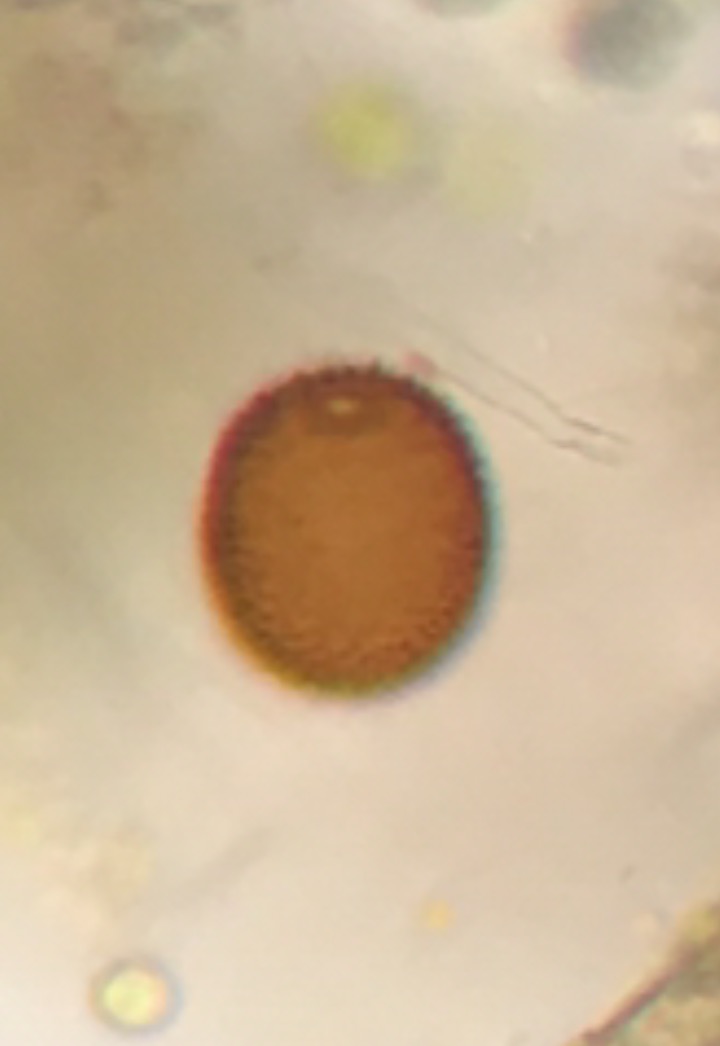
Stephanodiscus has a circular valve view with uniserial punctae near the center and radial multiserial punctae out from the central area. There is a circle of spines protruding near the periphery from the smooth areas between the rows of punctae.
References
"Genus Detail." :: Algaebase. Web. 15 Apr. 2016.
Organism 3: Chilomonas
Domain: Eukaryota
Kingdom: Protista
Subkingdom: Protophyta
Phylum: Cryptophyta
Order: Cryptomonadales
Family: Campylomonadaceae
Genus: Chilomonas
Defining Characteristics
Observations and comments:
Chilomonas is heterotrophic, and a genus of cryptophytes. It also doesn’t have chromatophores (pigment-containing structures) and lives by ingesting organic matter.
References
"Chilomonas." Wikipedia. Wikimedia Foundation. Web. 14 Apr. 2016.
"Taxonomic Information: Chilomonas Paramecium;inf." Organism: Chilomonas Paramecium;inf. Web. 14 Apr. 2016.
Organism 4: Spirogyra
Domain: Eukaryote
Kingdom: Plantae
Phylum: Apusozoa
Division: Chlorophyta
Class: Zygnematophyceae
Order: Zygnematales
Family: Zygnemataceae
Genus: Spirogyra
Defining Characteristics
Observations and comments:
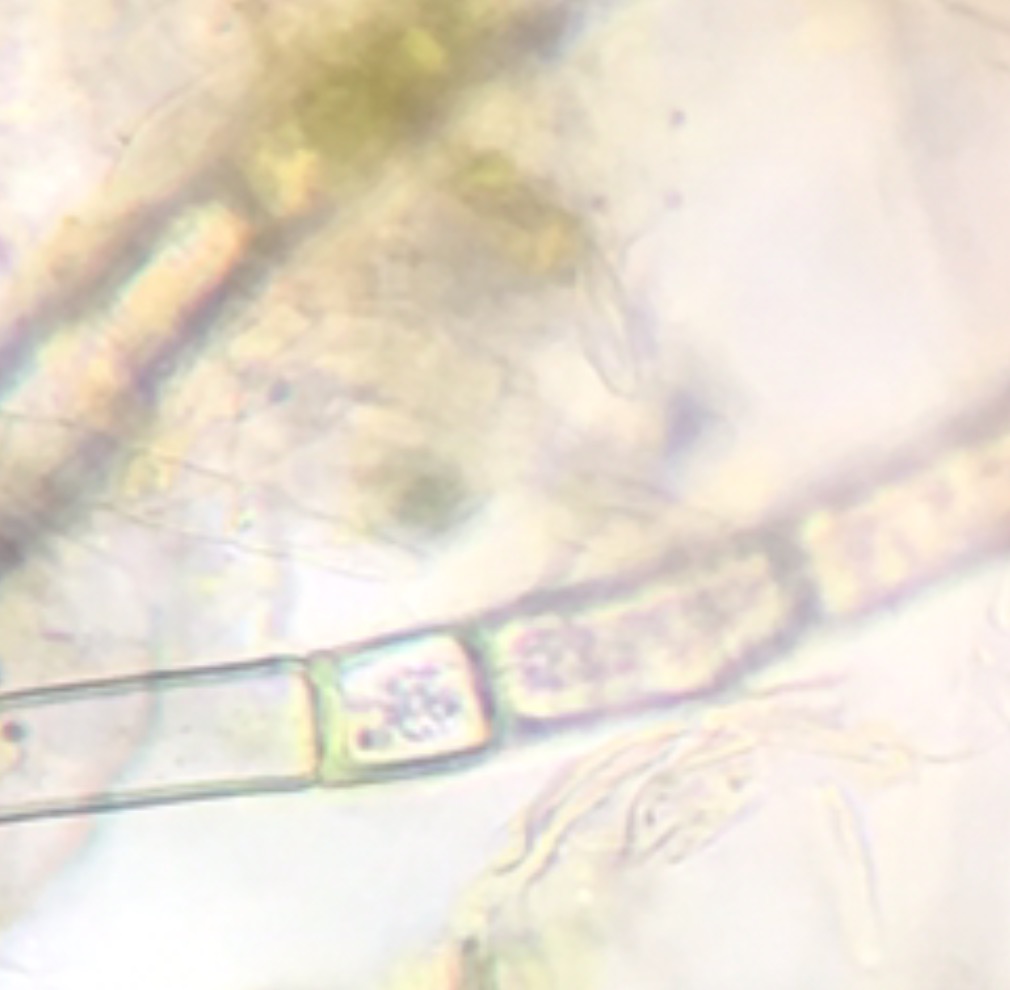
When there is no enough sunlight and warmth, spirogyras produce huge amounts of oxygen as bubbles between the filaments and tangled. Then the filamentous masses come to the surface and appear as slimy green mats.
References
"Spirogyra." Wikipedia. Wikimedia Foundation. Web. 14 Apr. 2016.
"Welcome to the PLANTS Database | USDA PLANTS." Welcome to the PLANTS Database | USDA PLANTS. Web. 15 Apr. 2016.
Organism 5: Gloeocapsa
Domain: Bacteria
Kingdom: Eubacteria
Subkingdom: Negibacteria
Phylum: Cyanobacteria
Class: Cyanophyceae
Order: Chroococcales
Family: Microcystaceae
Genus: Gloeocapsa
Defining Characteristics
It looks like some green dots
It appears to be only one cell since the new cells temporarily get together
They are also known as “Glow caps”
Observations and comments:
Some of the gloeocapsa species are halophiles and they are found in hypersaline lakes and in other high salinity environments.
References
"Algaebase."Algaebase. Web. 14 Apr. 2016.