Showing posts with label Most-Excellent-Ecospheres2. Show all posts

Sunday, May 22, 2016

Phylum Almost Cool's Ecosphere Final Blog Post

Hey guys,
Here's our final ecosphere post! Just wanted to give a little update on our Snail pad... We had a SNAILPLOSION!!! We very happy to announce Gary had many many many snail babies.

Gary (bottom left) with some snail babies

A closer look at the larger snails in the ecosphere

We wanted to compare an ecosphere that had a snail as well as most ingredients in common. Both of our ecospheres have water, minerals, gravel, soil, hay, mermaid plants (MCDC has one extra), and a snail. The differences in our ecosphere is that we included euglena, volvox, utricularia, and daphnia whereas MCDC included sand, pond water, & an aquatic floating fern. MCDC's ecosphere piqued our interest because their snail's reproduction quite different than ours.


Phylum Almost Cool’s Ecosphere

MCDC’s Ecosphere

  • Water
  • Mineral Supplement
  • Gravel
  • Soil
  • Hay
  • Euglena
  • Volvox
  • Two Utricularia Plants
  • Two Mermaid Plants
  • One Snail
  • Daphnia

  • Water
  • Mineral Supplement
  • Gravel
  • Soil
  • Hay
  • Sand
  • Pond water
  • Aquatic Floating Fern
  • Three Mermaid Plants
  • One Snail


Snails like Gary (Ramshorn snail) can reproduce asexually very rapidly if there is an abundant source of food. Since snails eat mostly dead or decaying matter and algae, we believed our ecosphere supported Gary very well because we included good amount of hay as well as dead daphnia that were more than likely eaten by utricularia. In comparison, MCDC's ecosphere did not include as much hay or any other heterotrophs therefore provided their snail with a smaller selection of food sources. Another difference was our water, it seems lately our water is yellow and MCDC's is very clear. We hypothesize that the relocation of our ecosphere created a bloom of either volvox, euglena, and algae or a combination of them. We are curious to see what happens to our ecospheres now that both have baby snails. We hope that our ecosystem will not crash because of the overpopulation of snails. 


The Fun-Gis Final Ecosphere Post

After the death of Gary in our ecosystem, we weren’t expecting much excitement to happen. We had a lot of daphnias, and we looked forward to seeing how crowded our jar would get, but that was all the expectations that we had. However, something unexpected did happen.


And it. was. GLORIOUS.


The story is this: We were checking out our jar as normal, and not really expecting much of a change from the previous week. Then, BAM, Kateka slammed the jar into that little ledge on the window while putting it back. Commence the freak out! Luckily nothing broke, but due to that bump, something fell from our floating fern. At first we thought it was just a leaf, but upon closer observation, we realized it was a BABY SNAIL!


What???? Gary had died weeks ago!


Since the snail is fairly grown-up at this point, we came to a conclusion that Gary probably laid eggs before he died, and the eggs must have floated up to the top where it got stuck on the floating fern and leaves of the plants. The baby must have grown up there where it’s dark colors blended in with the plant making it hard for us to have seen it.


But wait, there’s more!


In the end, we counted 5 total baby snails. We discovered these snails on May 11th, and by the time May 16th rolled around, the algae growth on the side of our jar had cleared up completely, meaning the mini-Garys have been feeding quite a bit. Hopefully there is enough food to sustain them for awhile.


Now onto our comparison. We chose The Good Boy’s ecosystem because it was the most similar, yet they had different results from ours.


As mentioned, our daphnia growth was craazy, but Gary died prematurely. In The Good Boy’s ecosystem, the daphnia are nowhere to be found--however, they have lots of baby snails. We hypothesize that the mystery pond water had the needed algae and bacteria for daphnia to thrive. Meanwhile, DI water used in TGB’s ecosphere might have lacked an essential nutrient. Our ecosphere had also been filled with algae, unlike TGB’s ecosystem, which was very clean. But, at the growth of our baby snails, the tank was clean!


Aside from the resurrection of snails and cleaning of the tank, our ecosphere is very similar to how it was last. An additional and expected event was the continuous growth of our mermaid and bacopa plants.


BONUS:


Here’s Gary 2.0 mounting the dead shell of original Gary. Slightly creepy. Mostly cute.

Ecosphere Report

<Ecosphere Report By MCDC>
Group 4 (Dayeon Jung, Wenyi Fu , Mariam Elias, Conner Laursen)
On April 4th, 2016, our group set up a self-sustaining ecosystem in a jar in order to observe how the ecosphere works; we all hope our ecosphere jar will persist, grow and possibly even flourish throughout the whole quarter. Other group also did the same experiment, but they have different ingredients. Therefore, we have different results. This week, MCDC is going to compare our ecosphere jar with other groups. Before starting the experiment, our group carefully discussed what organisms that we would like to put in the ecosphere jar. During the experiment, we followed the procedure which  was provided by the instructor and recorded all the materials that were put into the ecosphere jar. Our group started with 3 mermaid (autotrophs) and we still have 3. We started with 1 snail and now have multiple snail offspring which can be seen crawling on the side of our ecosphere. We hope to observe, compare and contrast our ecosphere with others from our lab.

IMG_1242.jpgIMG_1391.jpgIMG_1155.jpg
Figure 1:Ecosphere Jar Set-up On April 11, 13, 18
Our ecosphere jar was very cloudy and dark when we first sat it up. This is because soil was the last thing that we added. According to the materials, we added a lot of organisms into our ecosphere jar but we could not see them clearly. After one week, our ecosphere jar became clear and clear. We think this is because all the sediment and soil settled down.
on  April 4, the first day that the our class did the experiment, our jar was very cloudy and full of dirt floating around. Also, some groups jars were not as cloudy as ours but some of them were  more cloudy than ours but as time went on, our jar cleared up more and more until it was similar to the light color jars, but the darker jars just kept getting darker and more cloudy until now. Fortunately, we just realized that we have many snail offspring in our jar. This was something that we did not anticipate happening. We are still wondering how just one snail can produce baby snails but itself. Maybe it was already pregnant. We are still working on the answer.

IMG_1524.JPGIMG_1529.JPGIMG_3550.JPG
Figure 5:Ecosphere Jar Partial view On April 25, May 2 and May 18
The snail is still alive and Mermaid and the aquatic floating fern keeps living. On that day, we compared our snail and other organisms with other group’s. The other group’s snail was dead already but ours was still alive and it was moving. We assumed that we put enough soil and peas for the snail to live. The dark and blurry water got cleaner and everything settled down.  

IMG_2443.jpgIMG_2499.JPG
                      Snail from MCDC                 Snail from Other Group
FullSizeRender (1).jpg
                     Baby Snail from MCDC       Baby Snails from Other Group
Comparing with other group that also have snail. Our most notable observation of our group and other groups with a snail is that all of us have baby snails. For our group, we did not have babies snails until recently; however, baby snails showed up from other group shortly after.

Conclusion
All the organisms we put on the first day are still alive; even the snail. On the first day, our team thought we put too much soil and peas and we were worried the snail would be dead within few days. However, the water got cleaner and cleaner and the snail’s movement was pretty good. To breed living organisms was pretty interesting. Also, to observe it every week and to check what organisms prevailed and which passed away was amazing.
How do snails reproduce?
Some snails are considered to be hermaphrodites. This means that every snail will have both male and female reproductive organs (snail-world). Snails reproduce similarly to almost everything else does - they mate and lay eggs. Some snails are hermaphrodites, though (have both male and female sexual organs in the same individual), which means that two snails can fertilize each-other (scienceline). Work Cited “How Do Snails Reproduce?” Snail Facts and Information. Web. 18 May 2016. “UCSD Science Line.” UCSD Science Line. Web. 18 May 2016.

IMG_4136.JPGIMG_1529.JPG
                                        Group Funguy                                   MCDC
Figure - Ecosphere from group Funguy
Materials : pond water, water & minerals, gravel, soil, sand
Autotrophs: Anabaena, Volvox, Selenastrum, Aquatic floating fern, Water sprite, Bacopa
Heterotrophs: snail

Description : The group FunGuy Ecosphere is kind of different from our Ecosphere, as they got Alga in their ecosphere and that's why it looks kinds of greenish. They also have a snail and its still alive but we aren’t sure if they have any baby snails or not. FunGuy group, let us know please.

IMG_4139.JPGIMG_3550.JPG
                                      Group SALT                                          MCDC
Figure : Ecosphere from group SALT
Materials : pond water, water & minerals, gravel, soil, hay
Autotrophs : Anabaena, Selenastrum, Water sprite, Bacopa
Heterotrophs : Shrimp, Daphnia

Description : The group SALT’s ecosphere bottle looks fresh and clean. However, after few weeks since they made this ecosphere bottle, the shrimp died. For us, MCDC, we have a snail and it still lives today.
IMG_4133.JPGIMG_1524.JPG
                                 Another Group                                           MCDC
Figure: Ecosphere from other group
Materials: water & minerals, gravel, soil
Autotrophs : Anabaena, Mermaid, Floating fern
Heterotrophs : Snail, Shrimp, Daphnia

Description : The shrimp is still alive. They have similar autotrophs to ours, but they only have one mermaid compared to our 3. They also have a similar floating fern, that is why they look alike.

Saturday, May 21, 2016

Final Ecosphere Post! KKJT vs JESK

Out of all the ecospheres in our class our ecosphere was most similar to the group JESK. Below are the two ecospheres for comparison.

KKJT Ecosphere
JESK Ecosphere

KKJT & JESK Similarity Matrix


I figured the best way to display the similarities and differences in the least amount of text was to use an all too familiar similarity matrix! Our ecosphere contained anabaena, a mermaid plant, and the protist stentor - JESK's did not. JESK's ecosphere contained pond water and a bacopa plant where as ours did not.

SNAIL DEATH ):

In both of our ecospheres the snails died immediately, I would assume this is due to the fact that snails feed on algae and it took several days for algae to accumulate from what was probably already existing in the pond water. Our ecosphere however did not have any algae to feed on because we did not include pond water in our ecosphere. 

BABY SNAILS (:

Roughly three weeks proceeding the death of the mature snails, both of our ecosphere gave rise to baby snails! The snails must have laid their eggs before they died and the baby snails were able to survive off of the accumulating dead organic matter or algae. 
GHOST SHRIMP 

I had never seen a transparent shrimp until this ecosphere experiment, not surprisingly that is how they got their name! These ghost shrimp will eat almost anything which helps explain how they have been so well off in both ecospheres. Every time we checked up on our ecosphere the shrimp would constantly be picking through the detritus in the soil or feeding off dead plant matter. These shrimp are great pickers and eat like machines!

STENTOR

Our stentors did not survive in our ecosphere, so I did a little bit of research to figure out why. Interestingly stentors are stalked meaning they are most commonly found attached to the ground. Because these little guys do not move around much you would assume they are likely autotrophic, but they actually filter feel on bacteria and plankton, grabbing food as it flows by. Due to our ecospheres pond-like environment there was not any water flow for the stentors to grab food from, so perhaps the shrimp got to the anabaena first or perhaps the shrimp ate the stentors due to its very large appetite!

DAPHNIA

There did not appear to be any living daphnia in JESK's ecosphere and there definitely were not any surviving daphnia in our ecosphere. Not surprisingly I believe the shrimp ate all of them! The shrimp is definitely the Tyrannosaurus Rex of our ecospheres!


Fun Fact: Dogs do not like giant snails... especially my dog Koda (:


Thursday, May 19, 2016

The Ecosphere Wonderland [by JESK]

Authors: Emma Brasseur, Shane Hall, Jessica Roth, & Karina Yu

Recap:
Snail
Heterotroph
1 Snail
Shrimp
Heterotroph
1 Shrimp
Bacopa Plant
Autotrophic
1 Bacopa Plant
Aquatic Floating Fern
Autotrophic
1 Aquatic Floating Fern
Anabaena
Autotrophic
2.25 mL
Daphnia
Heterotrophic
4.75 mL
Table 1: The original contents of our ecosphere

New Developments:
Since our last post, our ecosphere has developed more algae, and snail babies (Figure 4). The development of our snail babies was slightly surprising to us, considering our parent snail has been dead/decomposed for quite some time now (Figure 3). Other than these new forms of life, our ecosphere is the same. Our shrimp is still alive and is doing very well. We were even able to record our shrimp hightailing around the ecosphere.

Compare:
We compared our ecosphere to Mariam’s group ecosphere (Figure 5). They included a snail, and the aquatic floating fern in their ecosphere like our group, but they did not add a shrimp, daphnia, anabaena, or bacopa like we did. However, MCDC had hay and three mermaid plants in their ecosphere. In the similar organisms the main difference was that their snail was still alive. Also, the water in their ecosphere seems to be a bit clearer, while ours is a little murky.
Video 1: Video of Shrimp


Figure 1: Ecosphere on May 11

Figure 2: Shrimp Swimming Around Ecosphere [May 11]

Figure 3: Decomposing Snail [May 18]

Figure 4: Baby Snails on Side of Container, As Well As Algal Growth [ May 18]


Figure 5: Mariam’s Group Ecosphere

Wednesday, May 18, 2016

Eco-sphere Blog Post #2 by TGB

Authors: Vlad A., Patrick W., Nate C., Gerar S.


Bonjour, fellow biologists! It's us, the Good Boys, back at it again to bring you all an update on our ecosphere. ᕙ(˵ ಠ ਊ ಠ ˵)ᕗ
Before we continue on with the update, we will go over details from the last post to refresh your memory on what happened and where our ecosphere erupted from. First of all, here is the list of organisms and materials that were included within our project:
Contents
Amount
Nutrient Water
200mL
DI water
2L
Gravel
1 cup
Fine Sand
2 cups
Soil
97.23g
Volvox
2 drops
Selenastrum
2 drops
Ram Horn Snail
1 count
Daphnia
16 count
Mermaid
1 count
Bacopa
1 count

And here is the generated food web (no changes from the last post):


Lastly, in the previous post we talked about how our daphnia disappeared from our ecosphere and our snail, Jesse, had plenty of babies. That’s pretty much the only main events. s( ^ ‿ ^)-b

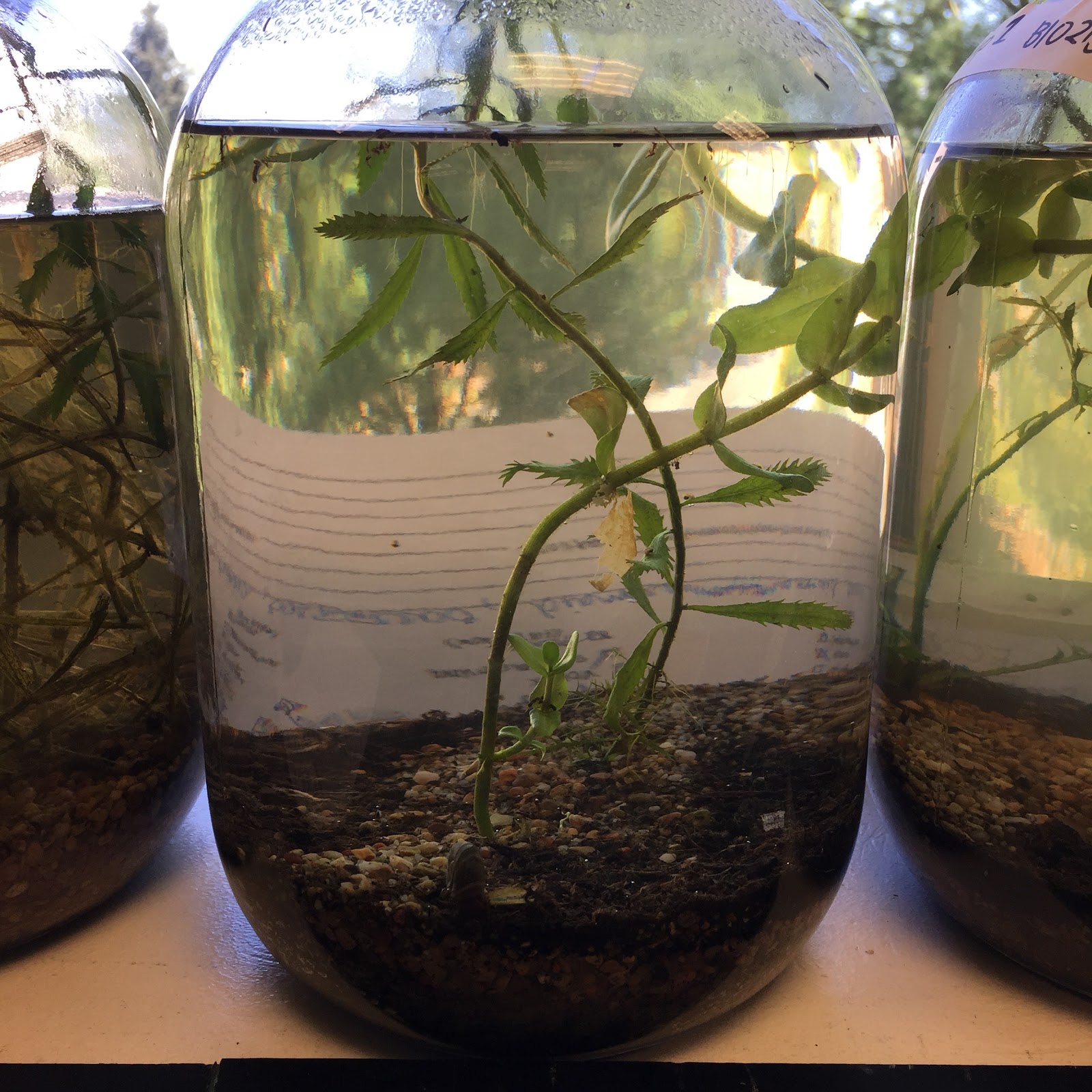
May 9th

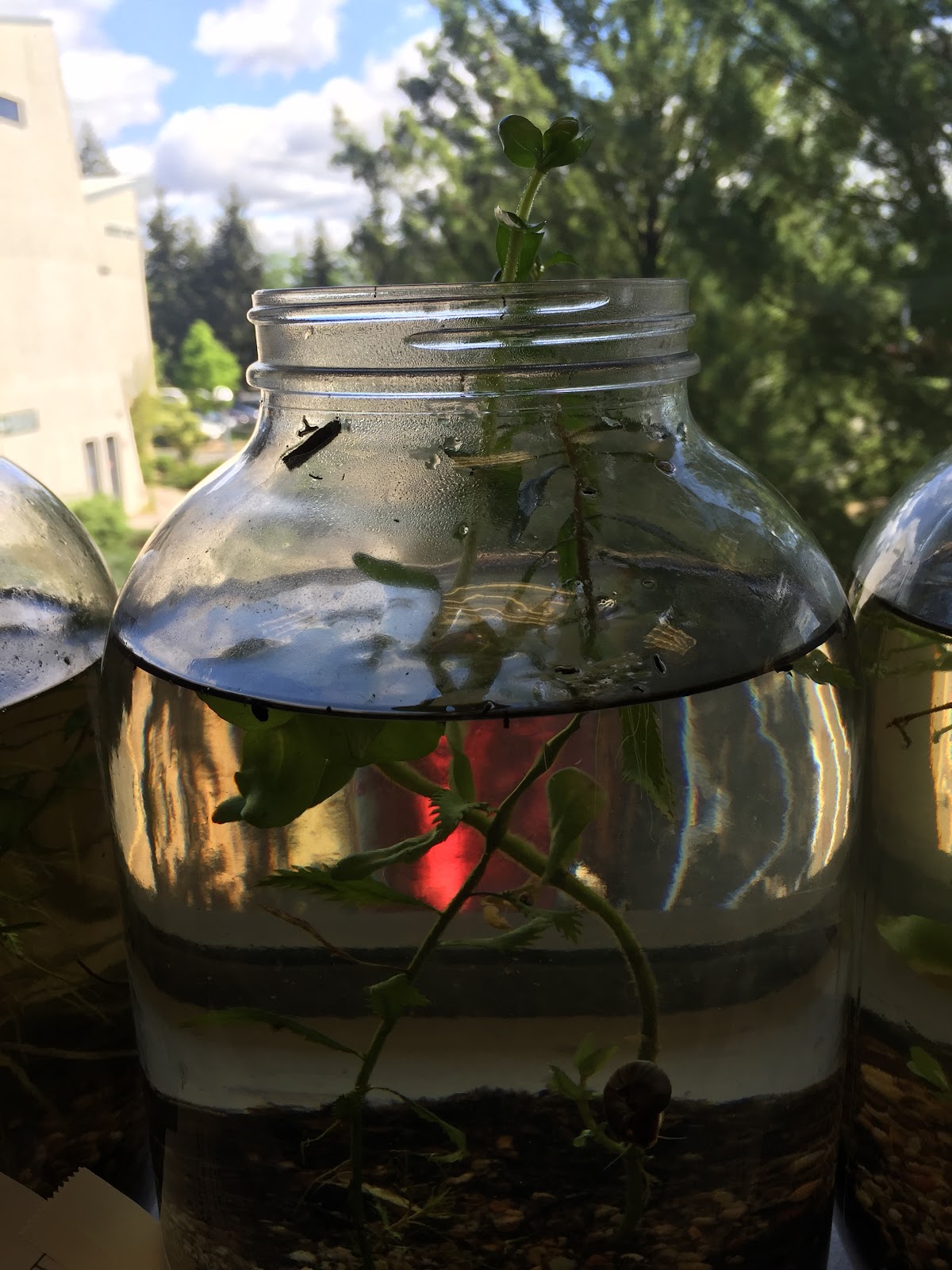
The first picture shows the entire ecosphere, including the ever healthy Jesse. (ノ◕ヮ◕)ノ*:・゚✧ There were not much changes since the last post in these pictures. However, the second picture shows the length of our bacopa and mermaid plants extending beyond our jar. They have definitely grown well!╰(◕ᗜ◕)╯


May 11th

Only two days have past since the last pictures, but these two pictures shows the significant difference between our ecosphere(right) between the Funguy's ecosphere(left). Our ecosphere lists were similar, except they included pond water and anabaena. Because they had pond water and anabaena, they had spectacular growth of algae, giving their ecosphere a nice green glow. Ours on the other hand has very clear water. Their snail also produced babies and they had a robust amount of daphnia. Even though our snail produced babies, our daphnia are non existent. ໒( ” ͒ Ĺ̯ ͒ ” )७ Their growth of other organisms could be contributed to the fact that they have anabaena and pond water that provides additional food and nutrients for their organisms.


May 16th

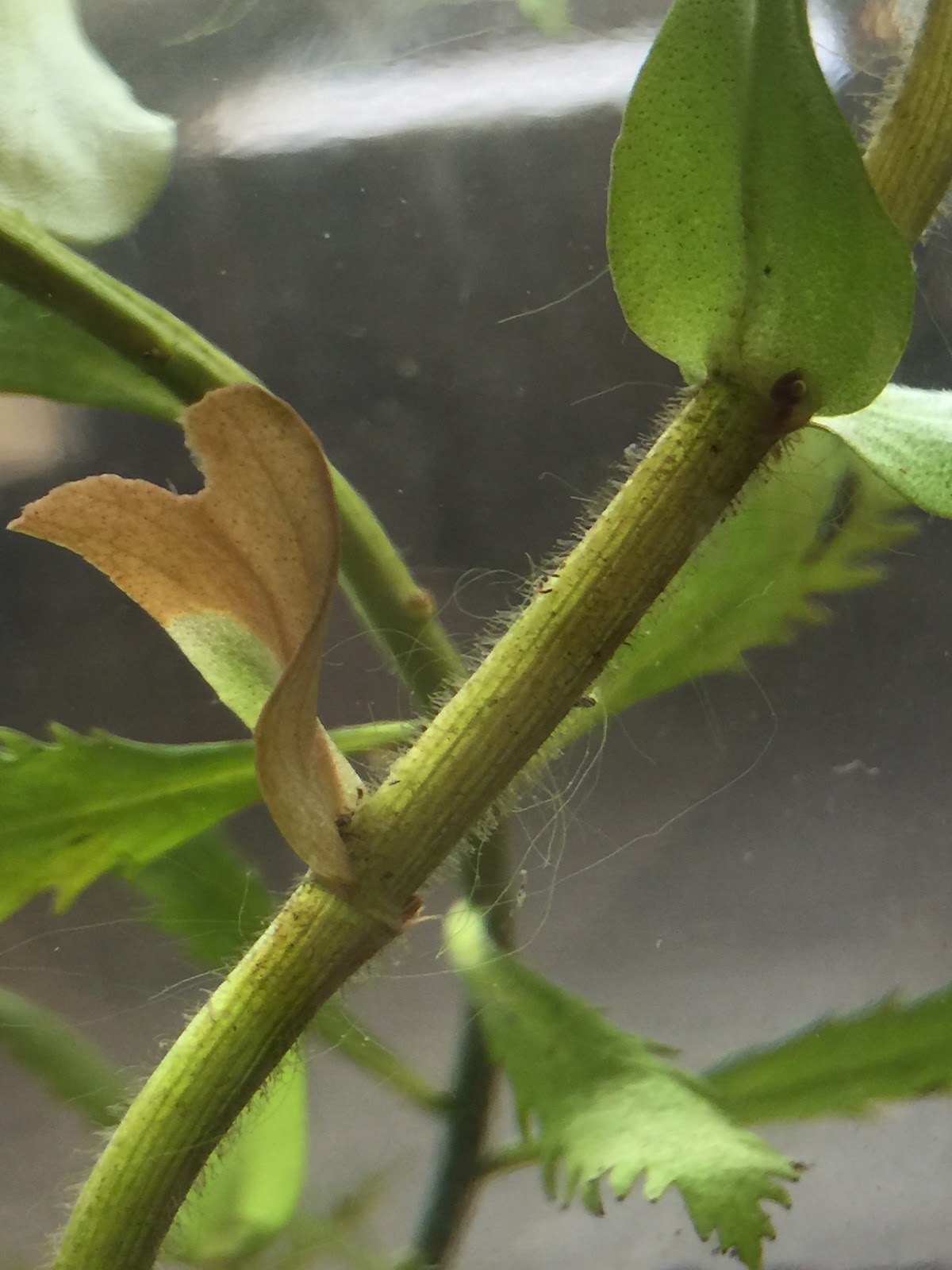
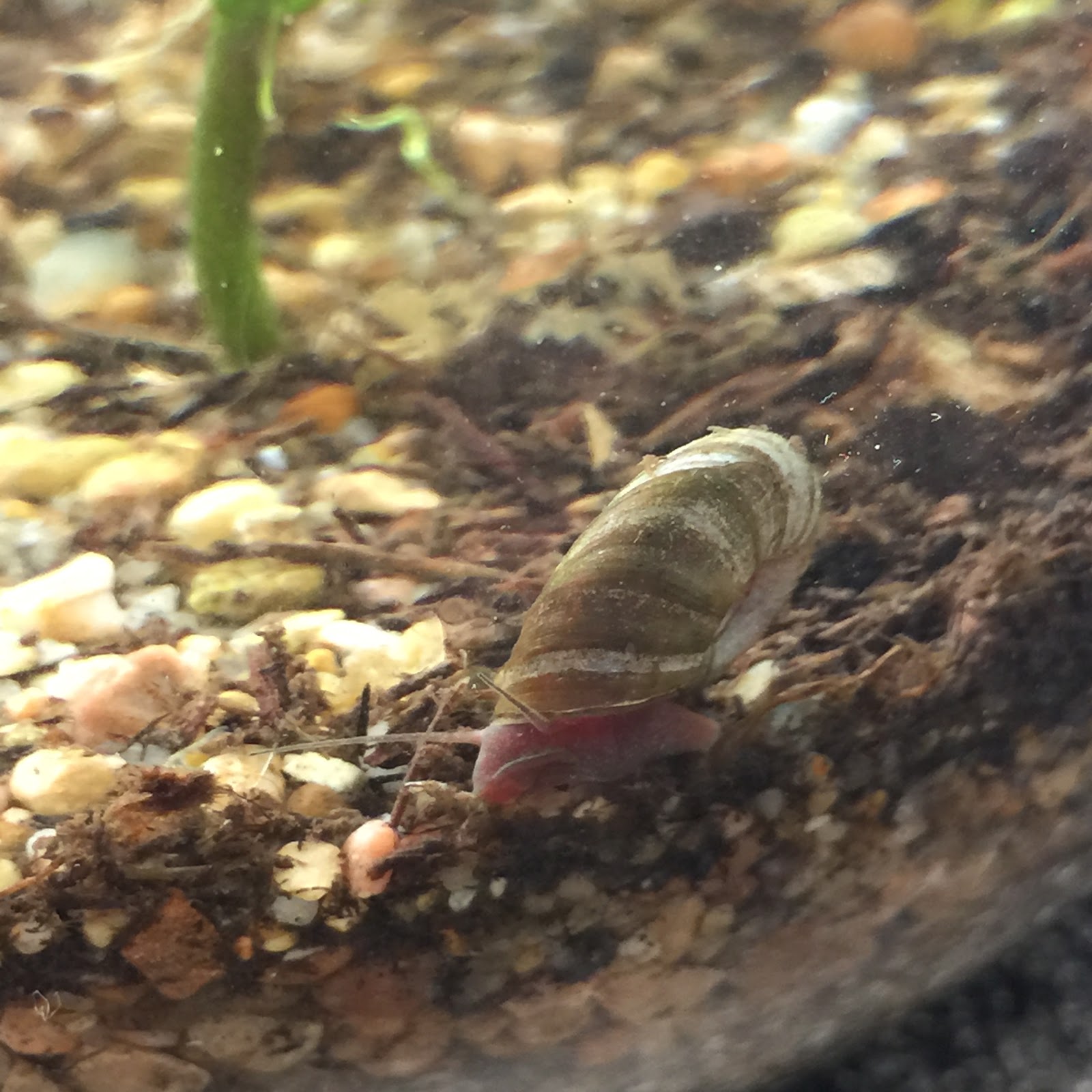
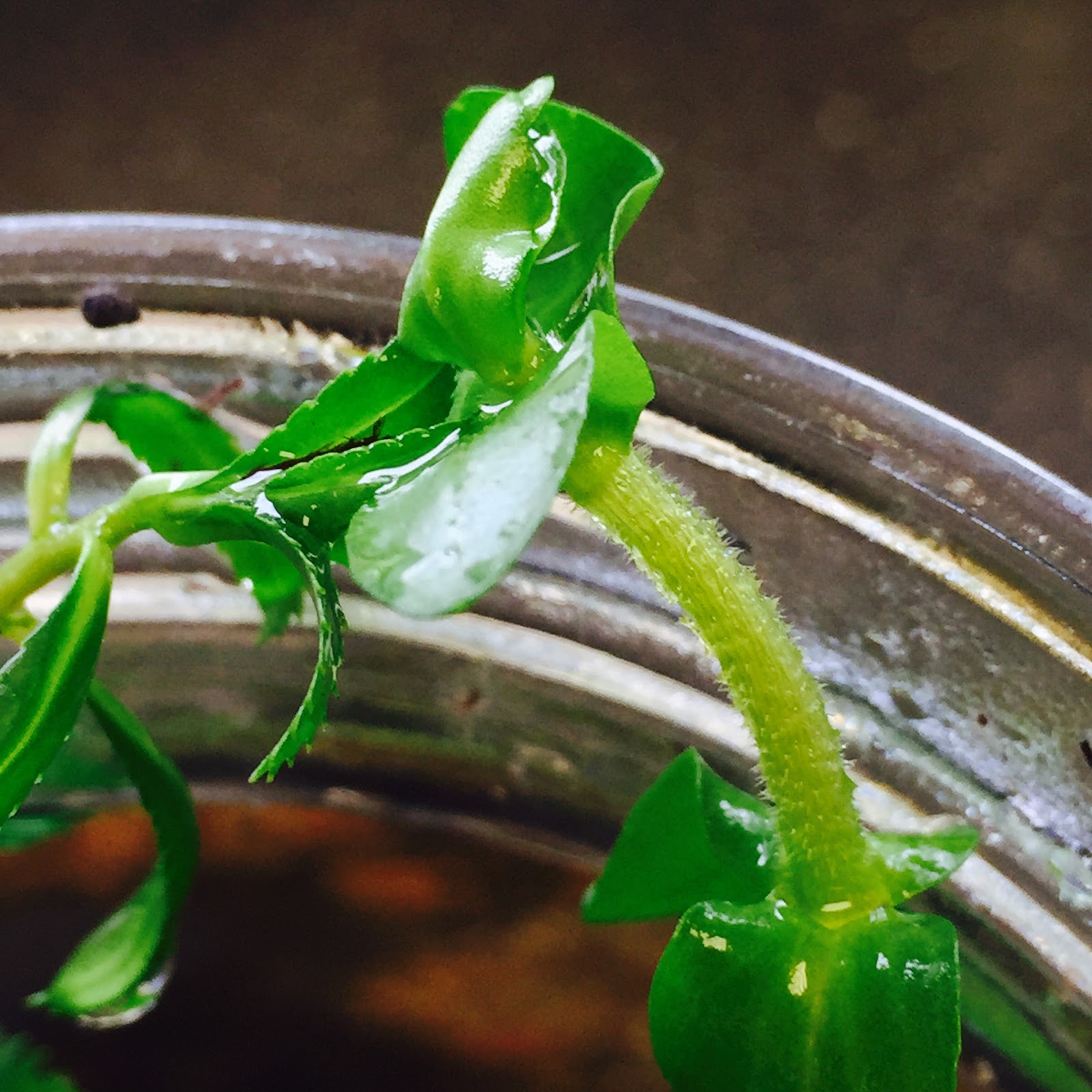
It's already established that the daphnia are missing so we will no longer speak of them from this point on. Our ecosphere shows no significant changes since the past week. The second picture brings to light the minuscule "hair follicles" growing from the stem of our mermaid plant. The leaf that is wilting is the single leaf closest to the ground. The next picture shows Jesse; earlier in the class period, Nate thought that Jesse was dead because his/her shell was just floating around, but later it was revealed that Jesse wasn't actually dead. ԅ། ຈ ◞౪◟ຈ །و The final picture was just a nice picture.


May 18th

Here is Jesse once again being a snail. There is still no major changes to the organisms within the ecosphere except for the emergence of more Jesse babies. /╲/\╭⁞ ͡° ͜ʖ ͡° ⁞╮/\╱\