Showing posts with label Ecology-in-Action. Show all posts

Friday, May 20, 2016

Ecology Research Project by MCDC

Research Of The Interaction Between Rhododendron and Bees By MCDC
<WENYI FU, CONNER K LAURSEN, DAYEON JUNG, MARIAM G ELIAS>
The Rhododendron is the national flower of Nepal. Rhododendron macrophyllum, which is a species of Rhododendron and is designated as the state flower in Washington officially in 1959. If we pay more attention to the flowers around us, we can see that Rhododendrons are everywhere in Washington. To know the interactions between flowers and insects, our group made many observations of Rhododendrons from beds, parks, and our backyards.
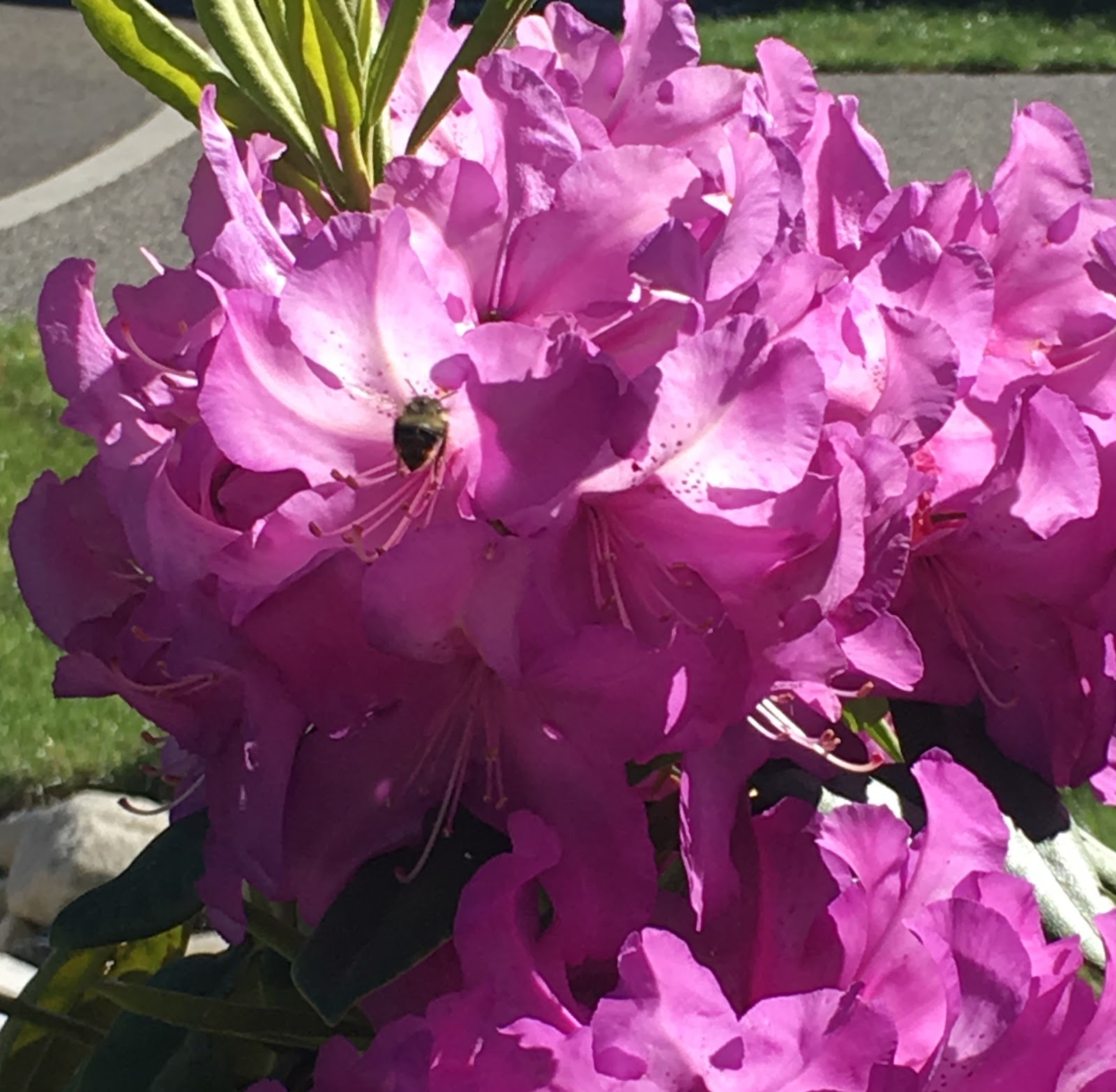
IMG_2140.JPG
Figure 1: The Photo Of Rhododendron Taken On The Roadside
FullSizeRender (1).jpg
Figure 2: The Pictures Of Rhododendron Taken At The Front Yard
We all got some different results, but only one thing in common, which is bees are more willing to pollen on the Rhododendron with purple color than other colors, such as pink, red and white.  According to this observation, we design to do research to determine whether Rhododendrons with purple color are more attractive to bees. Does this situation occur accidentally or does it depend on other conditions, such as the weather, temperature or even the color of the Rhododendron? As a result, our group comes up with a hypothesis; Rhododendron with purple color is more attractive than other colors. During the experiment, our group will do some research on Rhododendron, to know whether the color influences its attractiveness to bees, and our primary focus will be the interaction between the Rhododendron with purple, red, pink color and the bees; the overall design of the experiment is to observe bees as they fly around pollinating on Rhododendron with purple, red and pink color and count how many times they pollinate each color. At first, doing some observations on Rhododendron to know more about Rhododendron. The locations around various neighborhoods have already been scouted and confirmed to have a diverse color pallet of Rhododendron flowers. We plan to do the observation outside a lovely lady’s house (address: 13407 47th Pl W, Mukilteo, WA 98275), which has three different colors of Rhododendron. Next, we will observe Rhododendrons with the same three colors in 2 other locations; on campus here at Edmonds Community College and 19019 20th Pl W, Lynnwood, WA 98036.  For each location, we will run two trials of observation; once in the morning, and once in the afternoon because of the differences of bee activeness during the day. There are four groupmates in our group in total, so we will have an observation time in the morning and the other one in the afternoon; four groups will be separated and do the observation in pairs, one observes, and the other one record the information that might affect the attractiveness to the bee, such as the weather and the temperature. When all the groupmates meet in a lab on Monday or Wednesday, we have to compare our results and answer various questions. After that, we will be able to conclude whether a purple Rhododendron is the most attractive to bees based on the number of times a bee pollinates it.
On May 9, our group started to discuss our observation schedule and places. We got the places for observation to Conner’s neighbor's house, his mom’s place and School’s garden which is in front of Brier building of EDCC. His neighbor’s house is located in Mukilteo, and his mom’s place is located in Lynnwood.  Also, we take two different times for observations which are morning, around 10 a.m. and afternoon which is around 6:30 p.m. The weather and degree of the day were different from each week. From the second week of observations, the flowers have been fading and falling. We have observed three different colors which are purple, red and pink.


Observation Schedule for 13407 47th Pl W, Mukilteo, WA 98275, Edmonds Community College and 19019 20th Pl W, Lynnwood, WA 98036

Morning
Afternoon
May 13, 2016
Done
Done
May 20, 2016
Done
Done
May 27, 2016
TBD
TBD


On May 13, 2016. We did our first observation. The weather was little bit sunny and windy. The flowers were getting fade and dry. It was 56 degree celsius outside in the morning, but 70 degree celsius in the afternoon. The most noticeable change from last week is the flower’s fading. Conner and Mariam(two of our groupmates) made three identically sized shoelace rings for limiting an individual area for the inspection of the Rhododendron plants. This is because we plan only to count the number of the bees in these consistent, specific areas.
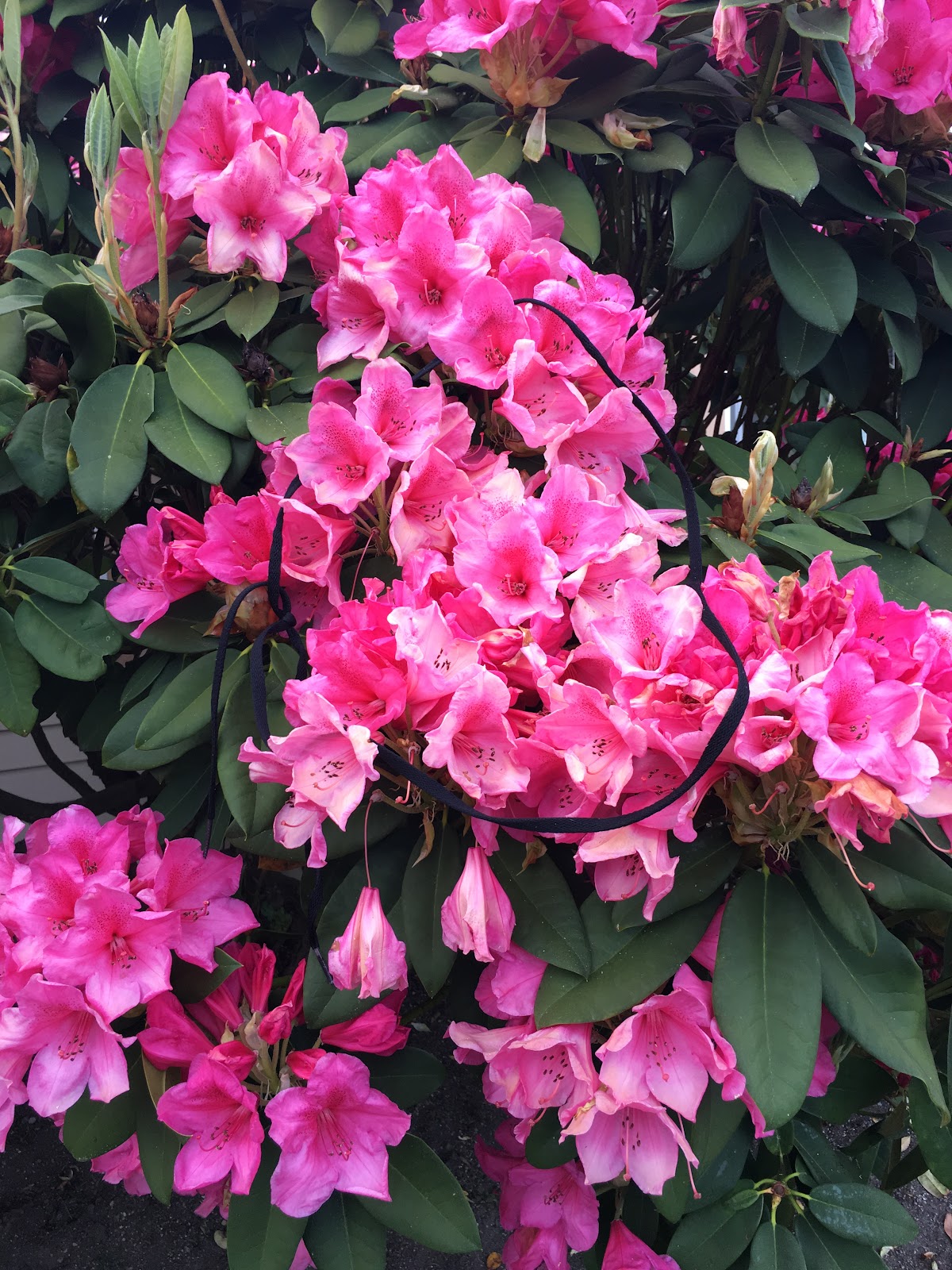
IMG_2368.JPG
Figure 3: The Specific Area For the Observation of Red Rhododendron
IMG_2375.JPG
Figure 4:  Photo of Pink Rhododendron That We Observed
Let us show you the results from our observation!
May 13, 2016  - 13407 47th Pl W, Mukilteo, WA 98275
The Color of Rhododendron
Amount of the Bee that pollinate flowers at 10:15 a.m.
Amount of the Bee that pollinate flowers at 6:30 p.m.
Purple
66
57
Red
51
36
Pink
38
33


May 13, 2016  - 19019 20th Pl W, Lynnwood, WA 98036
The Color of Rhododendron
Amount of the Bee that pollinate flowers at 10:00 a.m.
Amount of the Bee that pollinate flowers at 6:30 p.m.
Purple
30
32
Red
24
28
Pink
19
22

May 13, 2016 - 19019 20th Pl W, Lynnwood, WA 98036 (Edmonds Community College)
The Color of Rhododendron
Amount of the Bee that pollinate flowers at 10:00 a.m.
Amount of the Bee that pollinate flowers at 6:30 p.m.
Purple
56
49
Red
38
37
Pink
32
27


On May 20, 2016, at 10 am in the morning we also did some new observation. It was 57oC (Cloudy and rainy weather). As time passing and the raining whether, the Rhododendron from the three locations are all withering. They do not as many as last week. Nevertheless, we still got some nice results. All the observation shows that the Rhododendron with purple color had more bees to pollinate on them; it is a good results for our hypothesis.  
May 20, 2016  - 13407 47th Pl W, Mukilteo, WA 98275
The Color of Rhododendron
Amount of the Bee that pollinate flowers at 10:00 a.m.
Amount of the Bee that pollinate flowers at 6:30 p.m.
Purple
11
17
Red
5
12
Pink
4
11


May 20, 2016  - 19019 20th Pl W, Lynnwood, WA 98036
The Color of Rhododendron
Amount of the Bee that pollinate flowers at 10:00 a.m.
Amount of the Bee that pollinate flowers at 6:30 p.m.
Purple
20
40
Red
29
26
Pink
10
3


May 20, 2016 - 19019 20th Pl W, Lynnwood, WA 98036 (Edmonds Community College)
The Color of Rhododendron
Amount of the Bee that pollinate flowers at 10:00 a.m.
Amount of the Bee that pollinate flowers at 7:30 p.m.
Purple
10
24
Red
4
9
Pink
6
4


After three weeks of observation and data collection, we have some research questions that we are going to focus before starting the report.
  1. Why Rhododendron in purple color is more attractive to bees?
  • Bees find blue, purple and yellow flowers most appealing.
  1. Whether the weather and temperature affect our hypothesis.
  • When the weather is cloudy and raining, the number of bees get decreasing.
  1. Whether the life cycle of Rhododendron affect this experiment.
  2. Do bees seek the Rhododendron with different colors depending on the taste of nectar?
  • The color and flavor of honeys differ depending on the nectar source (the blossoms) visited by the honey bees. In fact, there are more than 300 unique types of honey available in the United States, each originating from a different floral source. So, it can be said honey determines the honey’s quality and taste.
bio.jpg
Figure 5: Life Cycle of Rhododendron
Reference
"Attracting Beneficial Bees: Gardener's Supply." Gardeners Supply. Web. 21 May 2016.
"Honey." National Board. Web. 21 May 2016.
"Reproduction." Of Rhododendron Ponticum. Web. 21 May 2016.

Fun-Gis: Ecology Research Project

Hello, Team Fun-Gi here presenting our very amazing, awesome, cool. epic, (if we do say so ourselves) ecology project!

For our project, we are looking into the small world of microbes! Specifically, microbe interaction with western sword ferns, or Polystichum munitum if we're trying to sound fancy. 

Polystichum munitum

We were first thinking of doing blackberry bushes, but we couldn't think of enough locations to sample. Dandelions were the next thought since they're everywhere, but we also trashed that idea because we wanted to have adventures in the forest. Thus, western sword ferns were chosen.

Our main goal is to sample the soil near the roots of these sword ferns at various locations, and analyze the bacteria that grows in them. We are hoping to find one or two bacteria that grows in all the soil we sampled. We hypothesize that this bacteria will be one that is helpful to the growth of the plant, perhaps some sort of rhizobacteria which is a bacteria that forms mutually beneficial relationships to the roots of plants and performs important processes like nitrogen fixation. Our plan is to eventually extract DNA from the one or two bacteria common to all samples, PCR it for amplification, then ship it out to get sequenced so we can identify them. 

We started our experiment quite a bit earlier than other groups, not because we knew what we were doing (we're still pretty confused... shhh), but because our experiment needs a lot of time for growing bacteria. What we've managed to do is collect 3 samples at 3 locations for a total of 9 samples. Our 3 locations were Gold Park, Pine Ridge Park, and Lynndale Park. We decided to grow our bacteria samples at 2 different temperatures: room temperature and  4C, which meant we had a whopping total of  18 TSA plates. It smelled just lovely.  

The plates have already grown, but we're keeping the results a mystery until our next post. Oh, the SUSPENSE!

While you're on the edge of your seat waiting for our next post, have a watch of this video of us out collecting samples on our first day:


UPDATE: Just realized you can't fullscreen this video so here's a link: https://drive.google.com/file/d/0BzFsia6tXjD0empFY0VCNm1ZV3M/view

Too clean or not too clean?

We used pond water from Goodhope pond, Sprague pond and Christina's pond. We prepared 12 biospheres, Three biospheres per pond along with 3 control biospheres. We used soil and gravel as the base of our biosphere. We filled the biosphere with 2.3L of our respective pond water. For our control we filled the biosphere with 0.2L of nutrient water + 2.1L of tap water. We also placed a mermaid plant in each of our biosphere along with 5 Daphnia.


We ran into a few complications when we went to collect our pond water. When we were collecting the pond water from Lynnwood’s Mini Park, we were met by an army of geese. It seemed like the geese did not want us to collect their precious pond water, they kept giving us the look of death through their tiny beady black eyes. At first we were terrified to approach them because they outnumbered us. There was only 4 of us against at least 20 of them even though they might have been slightly shorter than us, their necks can stretch pretty far and their bite is definitely going to be worse than their quack! But Thinh ignored their wrathful gaze and just plowed ahead to collect our precious pond water. Thankfully the geese ignored him and did not attempt to disturb him although they kept glaring at him and they also made sure that he knew that they were extremely dissatisfied at his disturbance.


After the attack of the geese, we made our way to our second pond which was Goodhope pond before we headed back to the lab. Over there we ran into 2 problems. The first problem was that the water was too shallow. We couldn't collect enough water to fill our gallon jugs. After much debating we decided that the only thing we can do is to actually enter the pond. So as we start figuring out how to get deeper in the water, an officer from the Lynnwood police department came up behind us, you know because we didn’t look sketchy at all. Judging by his confused face he probably thought we were doing something much worse than collecting pond water, but he reminded us we probably shouldn’t drink the water. We reminded him we were actually there to test the grossness of the water. He lingered a little before leaving when we realized we definitely should have gotten a picture with the cop to show you guys. After that it was back to the lab to see what was in our water.


We set up three identical for each the pond waters and a control in lab. With each of the pond waters, we also had to check every detail of the water like pH, oxygen dissolved, and obviously what organisms might be living in it. There was some pretty interesting results, but as Thinh likes to say, it’s a surprise.


Ecology Research Project

Hey everyone!
We want to share with you what we are doing for our Ecology Research Project.

Bumblebee on a Rhododendron flower

During this project, we will observe bees while being exposed to a set of fake flowers that have different combinations of fragrances and nectar concentrations. Our goal is to see whether or not there is a preference for either fragrance or nectar concentration, or if there is a correlation between the two (ie: one fragrance will be preferred over the others, one nectar concentration will be preferred over the other, or one combination is strongly preferred over the others).

Here's what we intend to use for our flower combinations: 


Fragrances
Nectar Concentration
(Sugar to Water Ratio)
·    No fragrance
·    Lavender
·    Rosemary
·    Lemongrass
·  0:1
·  1:1, 1:2, 2:1
·  1:1, 1:2, 2:1
·  1:1, 1:2, 2:1

     So far we have gathered most of our supplies and modified our fake flowers to hold micro pipette tips for nectar. In the next days of lab we plan to make up our "nectar", which will just be sugar and water combined together in the specified volume to volume ratios, as well as measuring sucrose concentrations in the nectar of flowers we see being visited by bees to see if we are in the correct ranges of concentration for attracting them. In the event that our concentrations are grossly different from those observed in actual flowers these concentrations may be modified.
     We created our flowers from fake flowers we purchased at Hobby Lobby. These flowers have a shape similar to tulips, and are purple which is a color known to attract honeybees. We wanted to make sure we picked flowers which were all the same color, and were a color already known to attract bees so that would not be a conflicting variable with either fragrance or nectar concentration. The flowers were in a bouquet originally so they were disassembled from the bouquet so they were all individual. The center of each flower had a plastic replica of the inner reproductive parts of the flower. There was then a small plastic piece in the center which held this and the flower to the stem. Each flower was pulled off the stem, the center plastic piece removed and then replaced with a small Eppendorf pipette tip which was then hot glued shut so it would effectively hold the "nectar" without leaking. We then inserted this new flower top back into the stem, and voila! If you'd like to see exactly what we did feel free to watch our vlog, which will be linked below. The flowers turned out amazing, and we're all super happy with them.


     In order to keep the flowers separated they will all be inserted into plastic cups that will be filled so as to keep them standing upright, and then the cups will be labeled with the fragrance and nectar concentration of the flower it contains. To mimic the fragrance the flowers would give off we've collected essential oils of flowers known to be attractive to bees based off bee-friendly plant lists provided by the Puget Sound Beekeeper Association and the Seattle Urban Bee Project. These essential oils will be diluted in water, and then a small piece of cheesecloth will be soaked in the water in order to pick up the fragrance. The cheesecloth will then be wrapped around the top of the Eppendorf pipette in the flower to mimic the way flowers would give off fragrance to attract the bees.
     The flowers will then be set out in an open area for a set amount of time, and observed to see which ones will be visited by bees. These visits will be recorded, and the data tabulated to attempt to determine if any correlations exist.
     We intend to go to at least two locations, Bellevue Botanical Garden and another location which we haven't chosen yet. So far our options are between the Kruckeberg Botanic Garden and Evergreen Arboretum & Garden. If any of you have suggestions on places to go, please comment below!